I’ve spent a good chunk of today scouring Steam Next Fest for one final demo to round out my coverage. It wasn’t an easy decision, especially after enjoying my time with games like Hellforged, Mini Gladiators, and Voivod: The Nuclear Warrior.
But as a one-man show, there’s only so much time in the day, and I’ve got plenty of handheld gaming content waiting for my attention.
While I won’t be taking a deeper dive into those three games, I still think they’re worth checking out. I’ve included their Steam store pages in the Worth a Look section of my Steam Next Fest roundup.
So without further ado, the last game I’ve covering is Go Next! by Mixidev.
If Go Next! looks a little familiar, there’s a good reason for that. The similarities to Megabonk are hard to ignore. They both are played in third-person perspective, have automatic weapons to mow down hordes of enemies and include ridiculous assortment of upgrades. While the two games are similar, there are some differences worth exploring.
Megabonk
Released September 2025
3D bullet heaven
Jumping, sprinting, and sliding
3 procedurally generated maps: Forest, Desert, and Graveyard
Approximately 30 weapons, 85 items, and 23 tomes
Single-player
Challenges and leaderboards
Go Next!
Launching November 2026
3D bullet heaven
Wall-running, dashing, sliding, and bunny-hopping
10 worlds with parkour-focused movement
46 weapons and 111 items
Online co-op for up to 4 players
Ranked seasons and Steam leaderboards
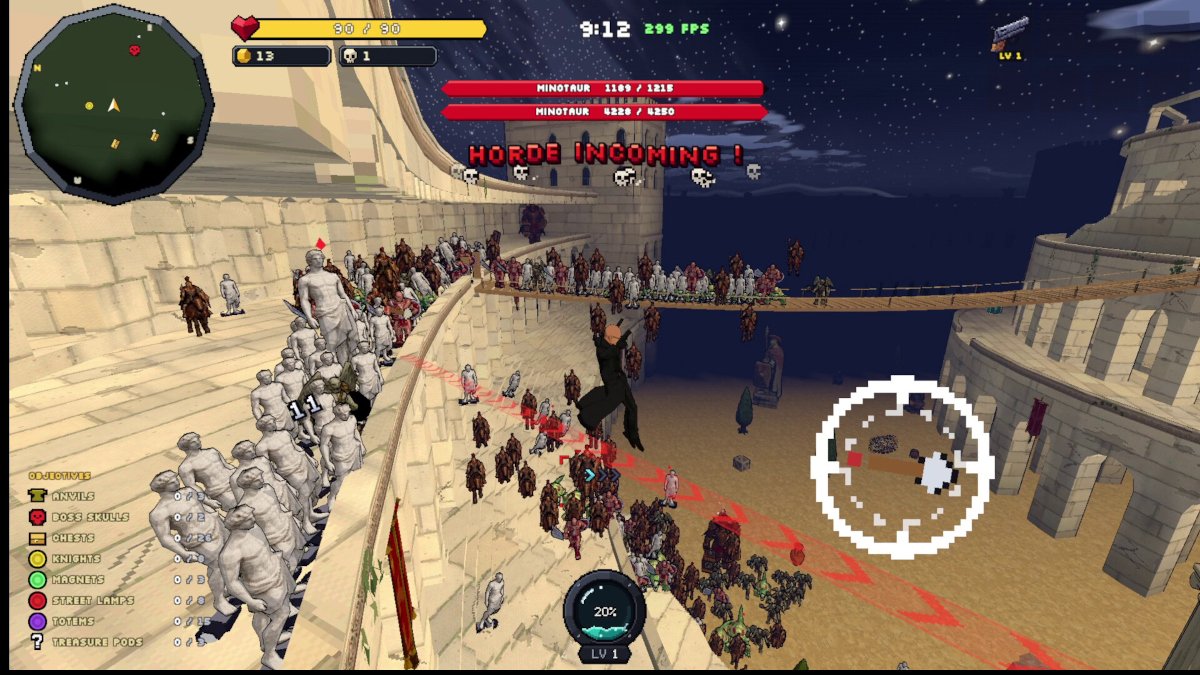
With the success of Megabonk, it’s not surprising to see more games exploring the idea of taking the Vampire Survivors formula into fully 3D environments. One of the latest is Go Next!, a third-person bullet heaven from developer Mixidev that combines automatic combat, parkour movement, and a countdown that makes surviving increasingly difficult.
I spent some time with the demo during Steam Next Fest, and while the similarities to Megabonk are immediately apparent, there’s more happening here than running around and avoiding enemies.
At its core, Go Next! challenges players to survive increasingly dangerous waves of enemies while collecting resources and choosing upgrades to strengthen their character. Weapons attack automatically, leaving you free to concentrate on movement and positioning. Defeated enemies drop XP, and collecting enough levels up your character, immediately presenting three cards to choose from. These upgrades include additional weapons and items that can be stacked to create increasingly powerful builds.
Players begin each run with a single weapon and can eventually equip up to four, with each weapon capable of reaching level 50. There are also 11 weapon rarity tiers, ranging from Common to Galaxy. The arsenal is certainly unusual, featuring everything from Zeus Lightning and Mjolnir to a miniature solar system, a black hole, and even a Goblin Catapult.
In the first area, you’ll encounter an unusual assortment of enemies, including skeletons, knights, owls, and snails. Then there are the plague doctors, who seem particularly determined to make your life miserable. These guys are absolutely relentless and quickly became some of my least favorite enemies to encounter. Enemies appear out of nowhere, with no real end in sight. Just when you think there couldn’t possibly be any more, the game warns you about an incoming horde. How nice of them!
Surviving the first 10 minutes is only part of the challenge. Once the timer reaches zero, regular enemies take to the air and charge directly toward you, dramatically increasing the pressure. Some worlds also feature superboss encounters, giving players another reason to assemble a powerful build before things get completely out of hand.
Roguelike Collect-a-thon
One thing that stood out during my time with the demo was the number of collectibles and progression systems competing for my attention.
Beyond the XP used to level up during a run, players can collect gold and resources such as wood, iron, and diamonds. These materials feed into the Upgrade Tree, which serves as the game’s permanent progression system between runs. Each world has its own branch, and investing resources unlocks access to new weapons, items, and 52 passive upgrades. Unlike the temporary upgrades earned during combat, these unlocks carry over into future runs.
There’s also plenty happening throughout each map to distract you from the endless waves of enemies. Totem challenges offer opportunities to earn additional rewards, while shrines introduce choices such as sacrificing health for gold or gambling on a capsule machine. Cursed chests promise better loot but come guarded by elite enemies. Other activities include kill altars, parachute airdrops, wandering merchants, and anvils that allow further weapon improvements.
All these collectibles and activities encourage exploration, but they also force you to choose between taking risks and playing it safe. Do you chase after something valuable, or keep moving toward a safer position as enemies close in? Personally, I’m always after the reward. Screw the risk! Which probably explains why I die so often.
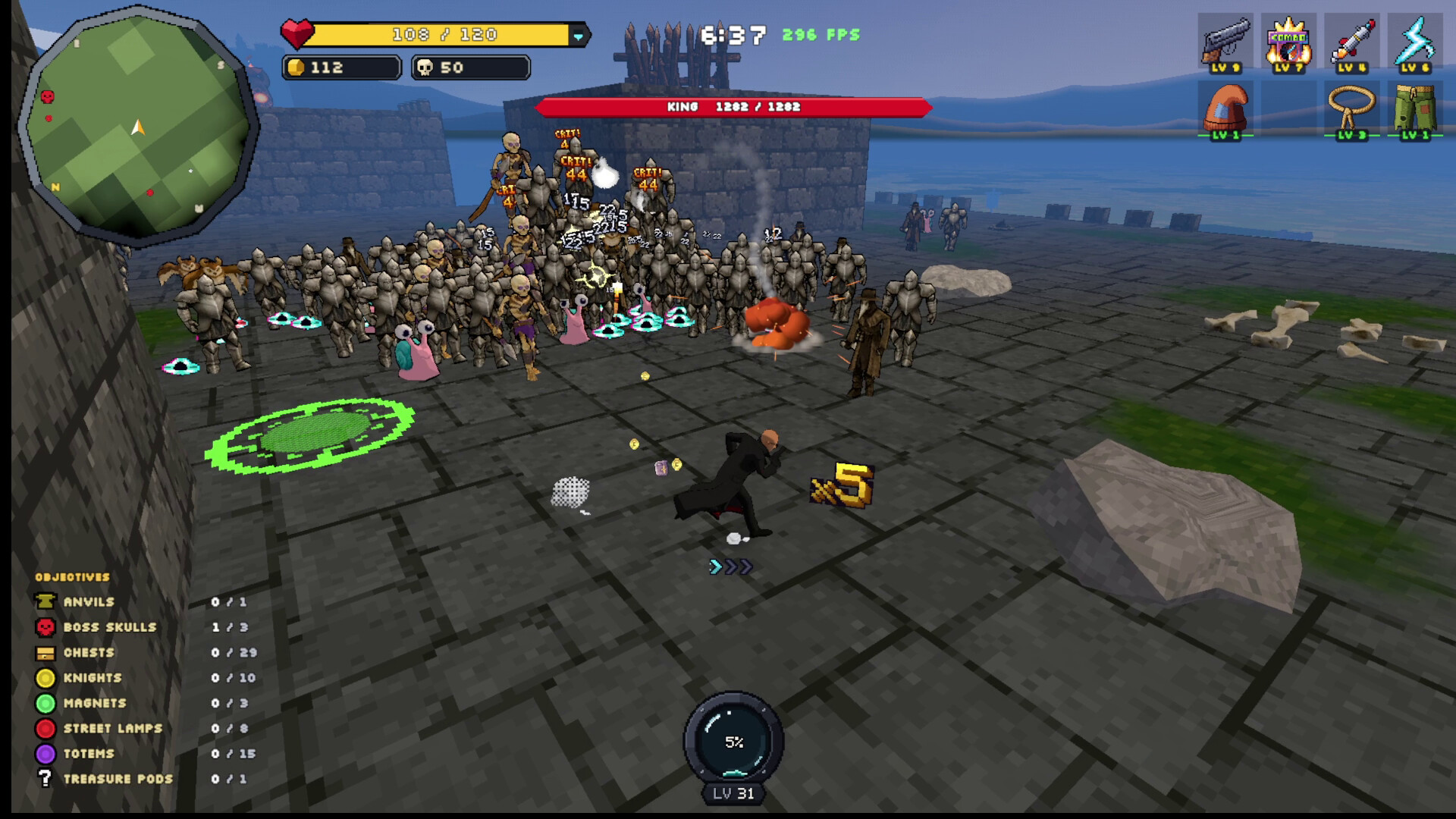
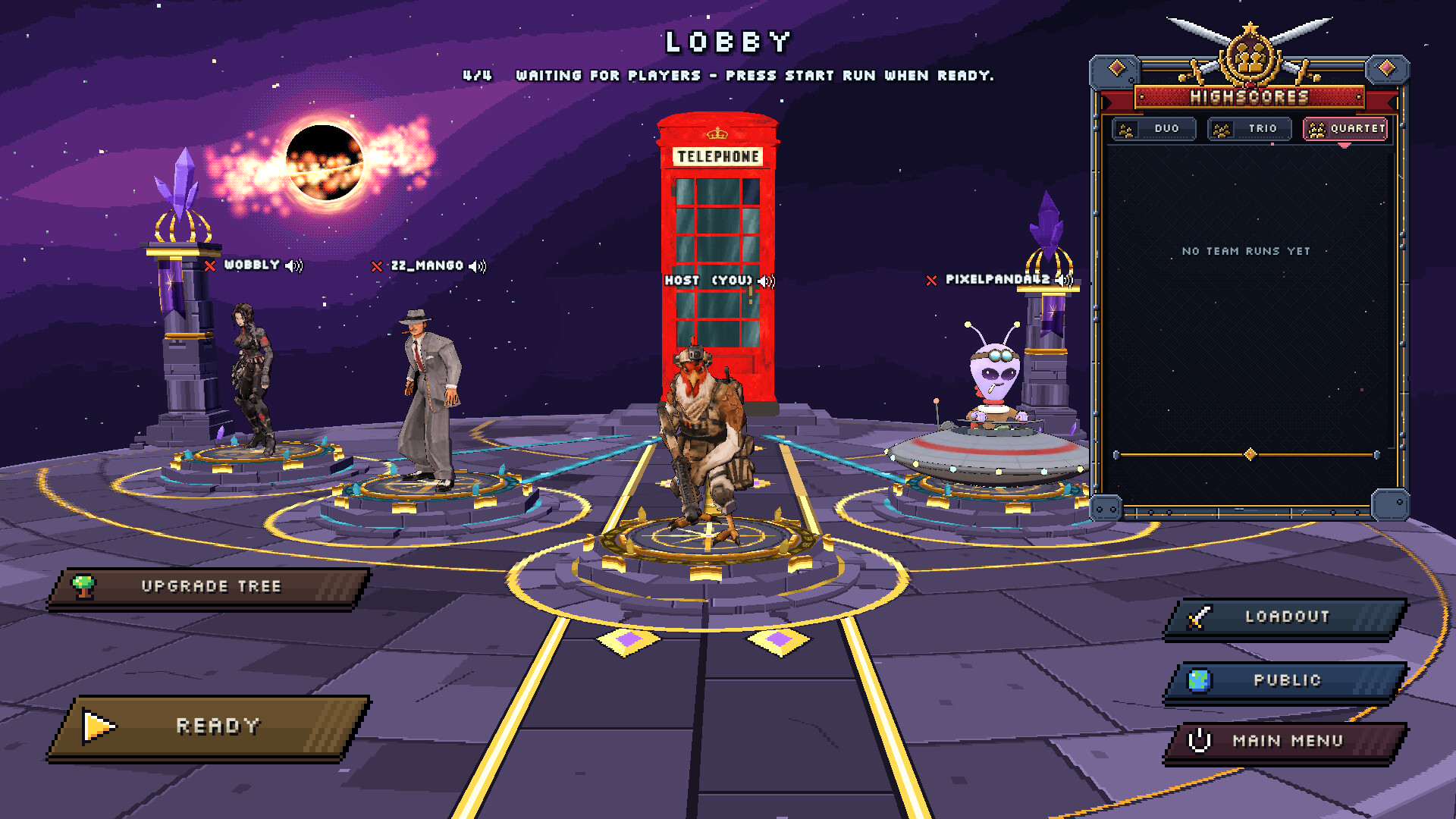
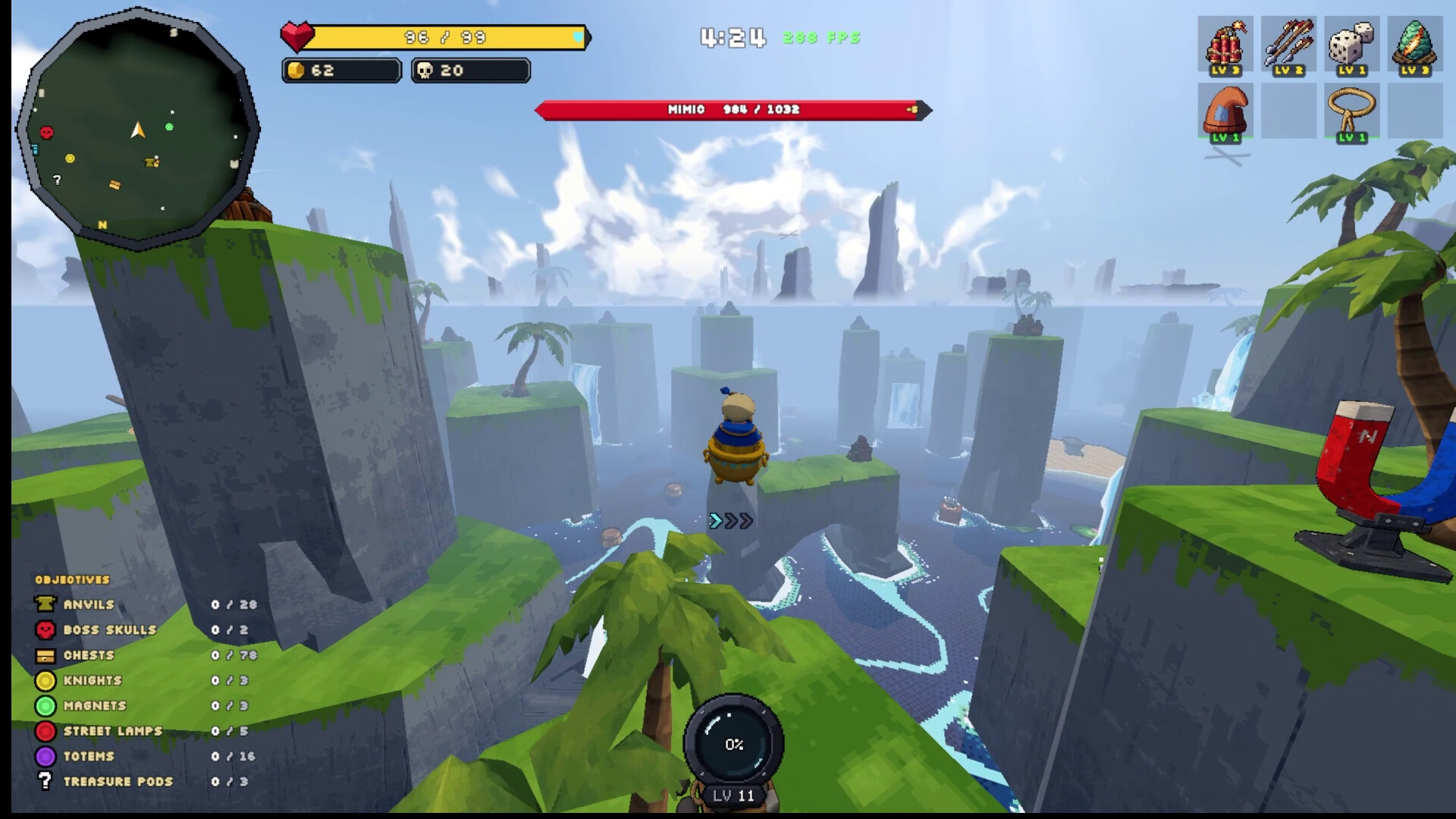
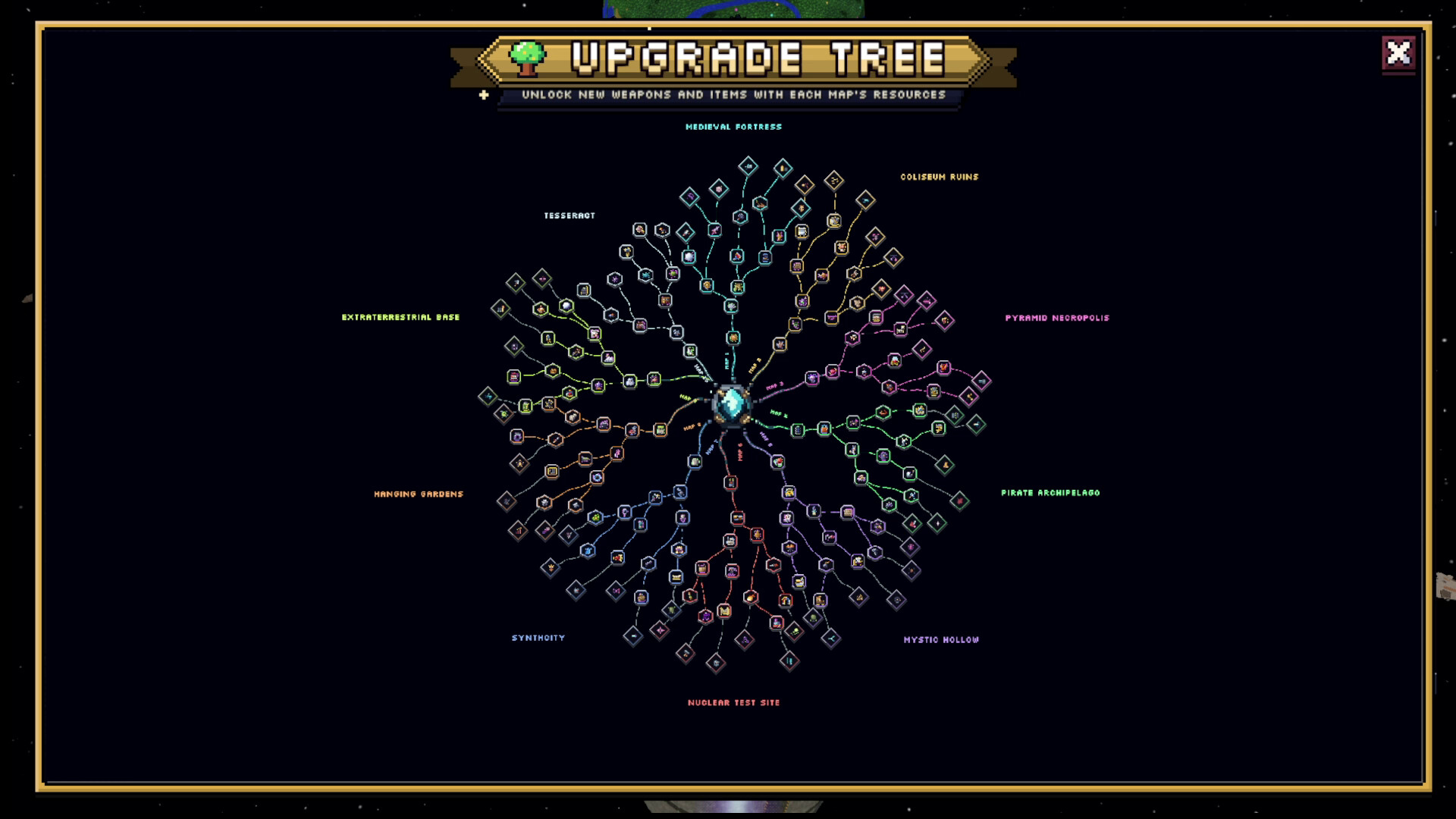
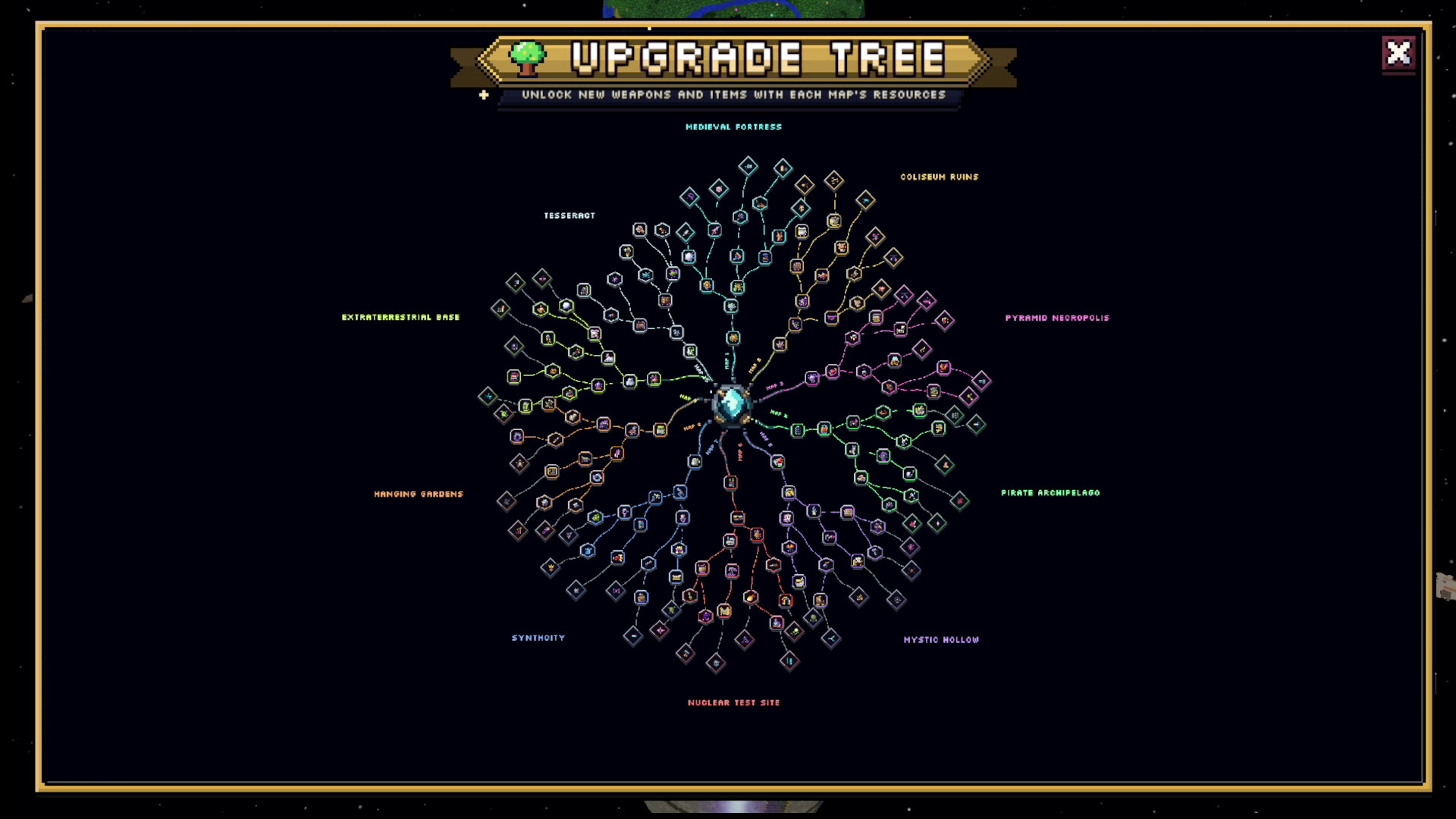
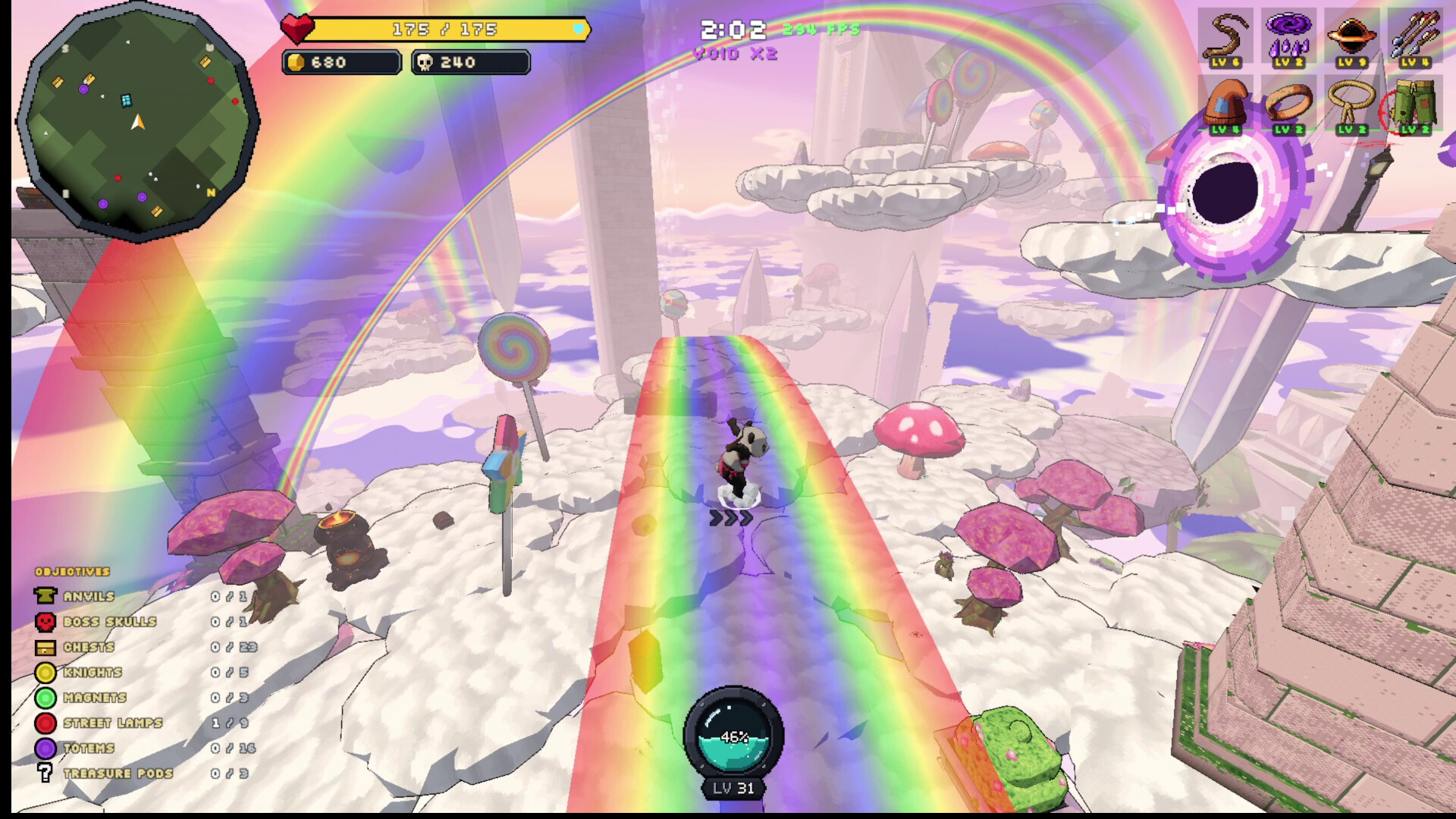
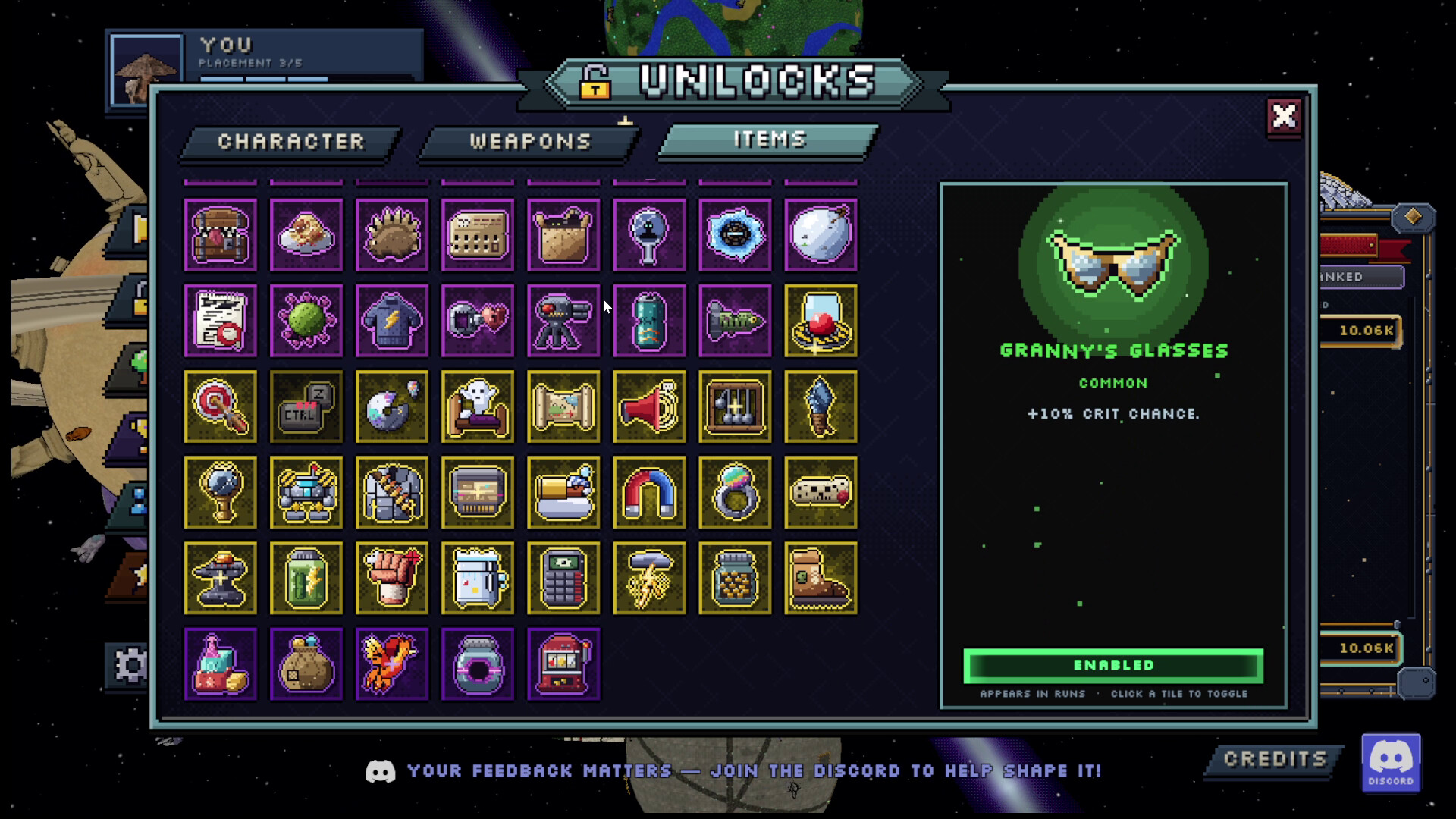
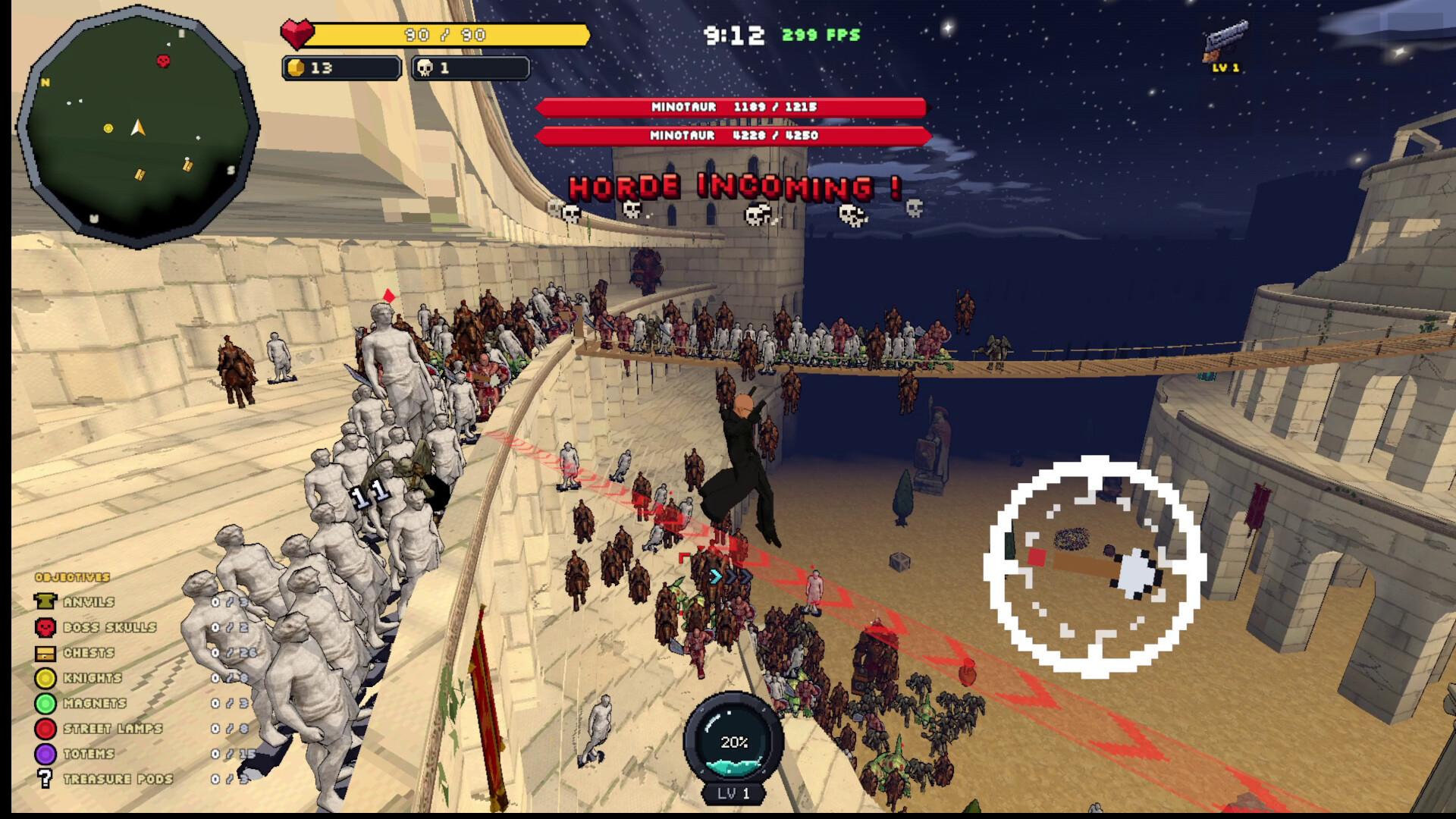
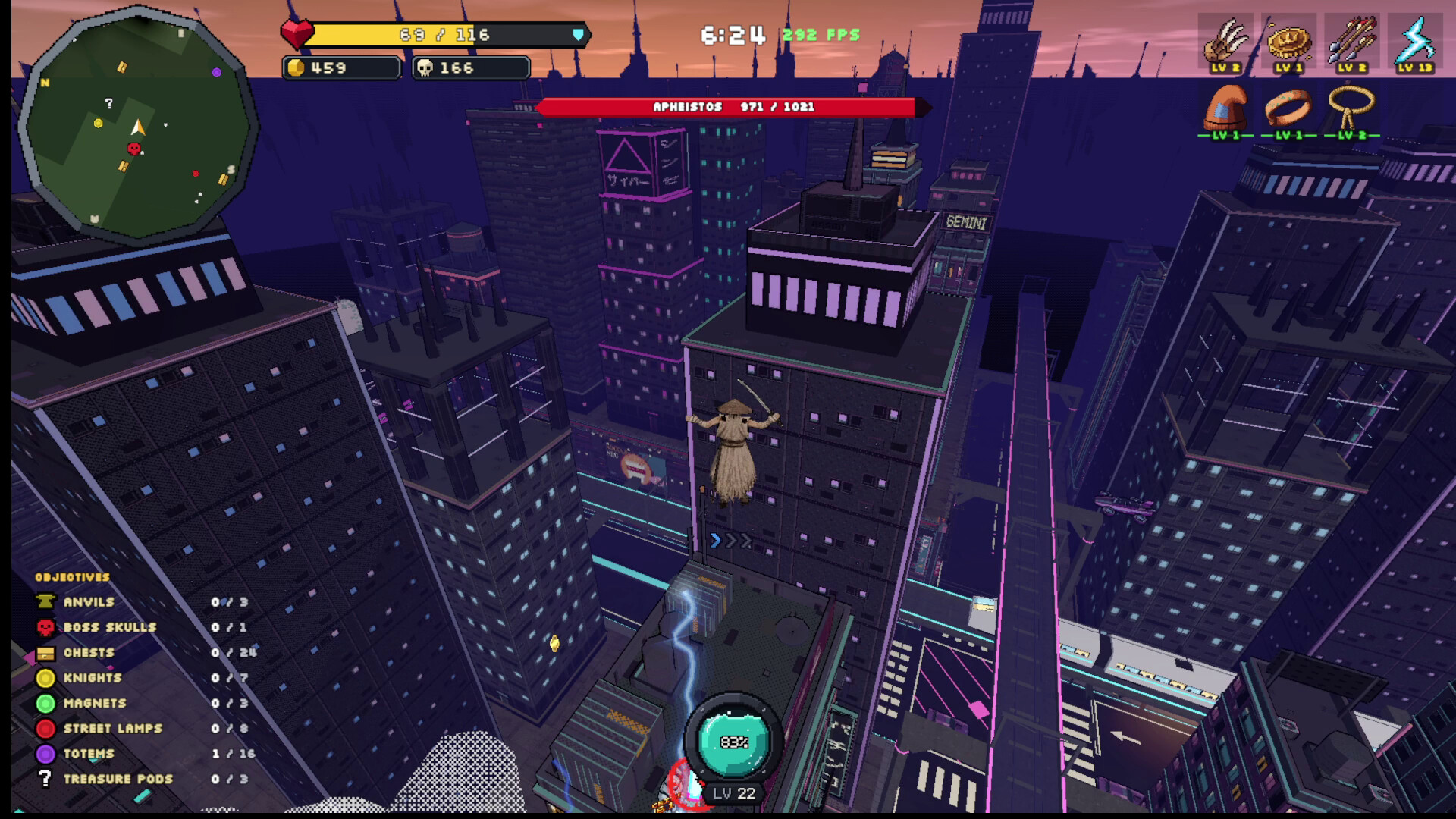
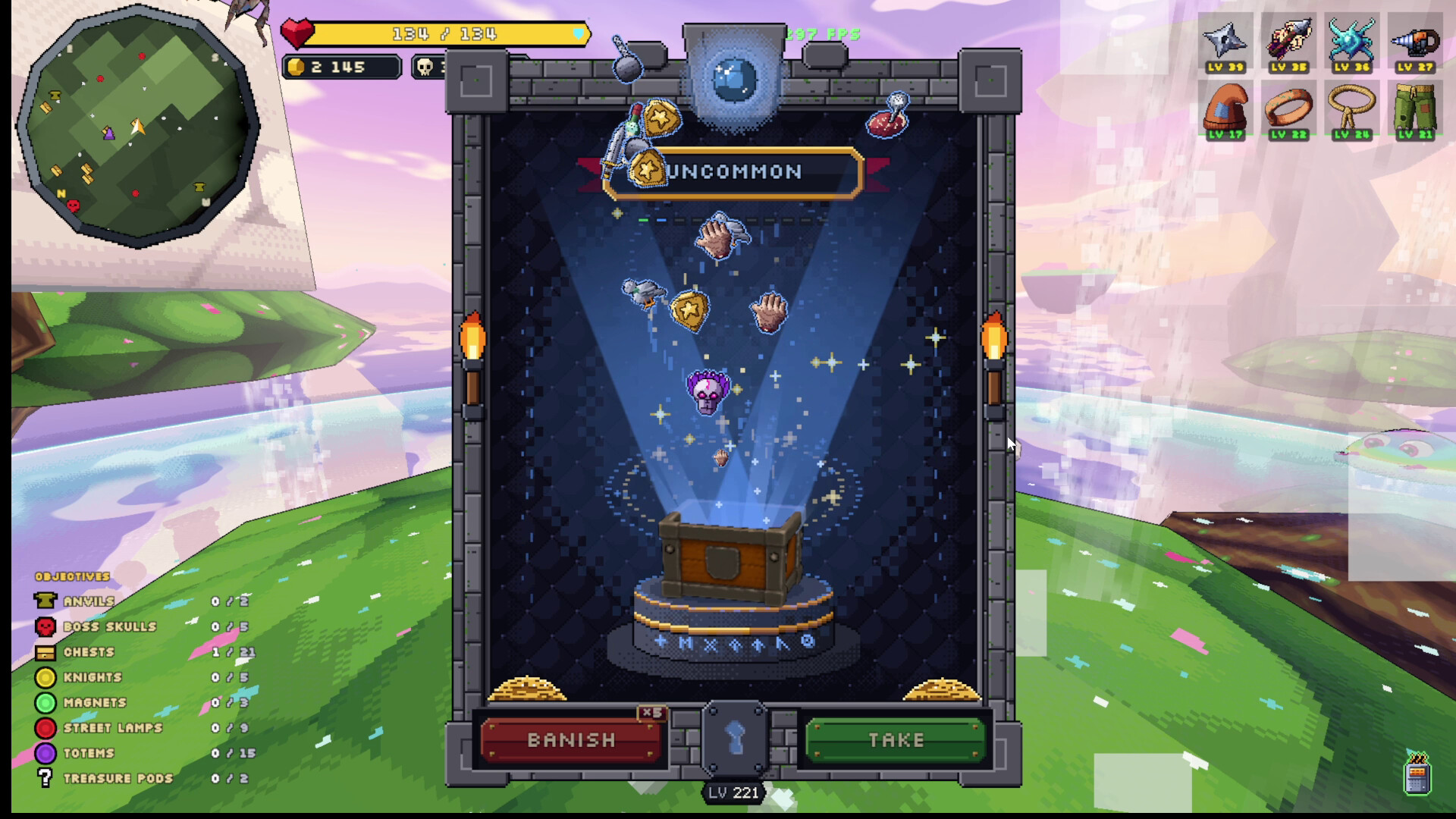
Image credit: Mixidev
Movement is a major part of the experience, with running along walls, dashing, sliding, and chaining together jumps giving players plenty of ways to navigate the environment.
The first available map, Ancient Lands, begins in a medieval fortress filled with buildings and towers. It’s an environment that encourages players to climb, jump, and take advantage of the vertical space. The movement feels surprisingly good. It’s fluid and responsive, making it easy to string together jumps, dashes, and other parkour maneuvers. At times, though, it almost feels too good.
The jumps and parkour abilities are so exaggerated and superhuman that I occasionally felt like I was playing two different games colliding into one. There’s the familiar bullet heaven experience of fighting endless waves of enemies and collecting upgrades, and then there’s this ridiculous parkour game where you’re leaping across rooftops and scaling structures with ease. It’s an unusual combination, but that absurdity is also part of the appeal. Go Next! doesn’t seem particularly concerned with realistic movement, and that’s probably for the best.
Getting to higher ground doesn’t necessarily mean you’re safe, either. Enemies can spawn at elevated positions, so climbing to the top of a tower might provide a temporary advantage, but it won’t let you escape the action entirely. There’s also fall damage from extreme heights, as I’ve learned the hard way. Jumping off a building to avoid an approaching horde can introduce an entirely different problem. The freedom to move vertically is useful, but the game continually pushes you to keep moving rather than settle into one location.
I tested Go Next! on both PC and the Steam Deck, and the experience was generally positive. On PC, the demo ran great, with smooth gameplay and responsive controls that complemented the game’s movement.
Performance on the Steam Deck was also good overall, although I encountered occasional hiccups and stutters. Nothing that completely derailed the experience, but noticeable enough to mention. Given how much Go Next! relies on quick reactions and constant movement, smooth performance makes a difference.
What’s Available in the Demo?
The demo features three unlockable maps, beginning with Ancient Lands. Four playable characters are available immediately, with additional characters unlocked by defeating superbosses.
The full game promises considerably more content, including 10 worlds, 46 weapons, 111 items, and 20 playable characters. Each character has unique abilities, strengths, weaknesses, and a signature starting weapon, although weapons aren’t restricted to specific characters. The roster includes some rather unusual personalities, such as a gangster who settles things with a coin toss, a plague doctor, and a scientist carrying a black hole.
Go Next! also supports online cooperative play for up to four players, with public and private Steam lobbies. Steam leaderboards add a competitive element for solo players and groups, while the full game also promises ranked seasons ranging from Bronze to Grandmaster.
With so many characters, weapons, items, and permanent upgrades, there’s certainly plenty to experiment with. Whether all those systems work together successfully is something we’ll have to see when the full game arrives.
Would I Play It Again?
Yes. The demo offers enough variety and ridiculous action to make another run tempting, even if my tendency to chase rewards keeps getting me killed.
Whether all these systems come together successfully in the full release remains to be seen, but there’s enough here to make Go Next! worth keeping an eye on.
Go Next! is currently scheduled for release on November 9, 2026, with its demo available during Steam Next Fest.
| GAMEPLAY | |
|---|---|
| Genre | Third-person horde survivor / bullet heaven. |
| Combat | Automatic weapons fire at waves of enemies, allowing players to focus on movement, positioning, and survival. |
| Movement | Wall running, dashing, sliding, and bunny hopping can be chained together to avoid enemies and stay mobile. |
| Worlds | 10 worlds to explore and survive. |
| CONTENT & PROGRESSION | |
| Weapons | 46 weapons to use against enemy hordes. |
| Items | 111 items to collect and experiment with. |
| Characters | 20 playable characters. |
| MULTIPLAYER & COMPETITION | |
| Online Co-op | Supports up to 4 players. |
| Ranked Seasons | Competitive ranked seasons. |
| Leaderboards | Steam leaderboards for tracking and comparing performance. |
| RELEASE & AVAILABILITY | |
| Developer / Publisher | Mixidev |
| Release Date | November 9, 2026 |
| Platforms | PC (Windows, Linux) |
| Demo | Available on Steam, including during Steam Next Fest (October 19–26, 2026). |